Smartsea
Full architectural and engineering services
Project completed, 2023
Environmental approach
BREEAM Very Good
Minimum energy performance:
RT2012 – 20% and BBIO – 30%
Area
12,000 sq m
Client
Eiffage Immobilier
Investor
Groupama Gan Reim / ANRU
Design team
Architects:
Carta – Reichen et Robert Associés, lead architect
Associate architects: EGR Atelier d’Architecture
Partners: SECMO | INGEROP | EODD | LASA
Credits
Photographers
Pierre Quintrand
Giaime Melonie
In April 2023, the delivery of the Smartsea office building, designed with our partners EGR Atelier d’Architecture, completed the Smartseille eco-district and simultaneously inaugurated the first phase of the Euroméditerranée EcoCité.
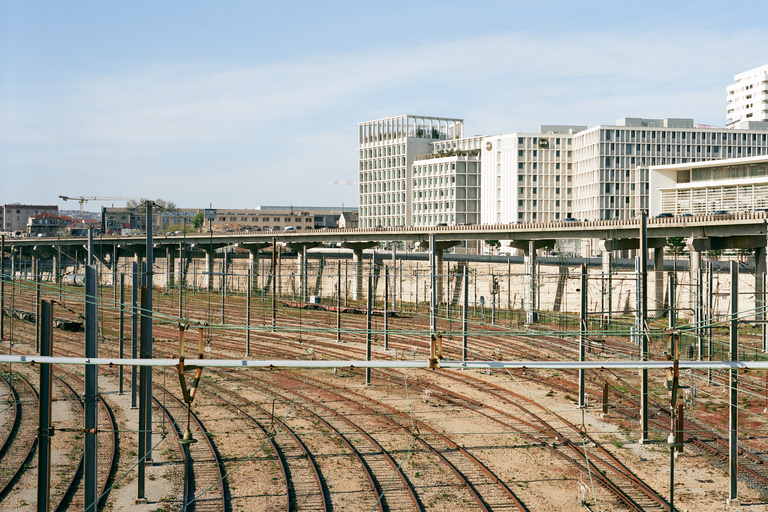
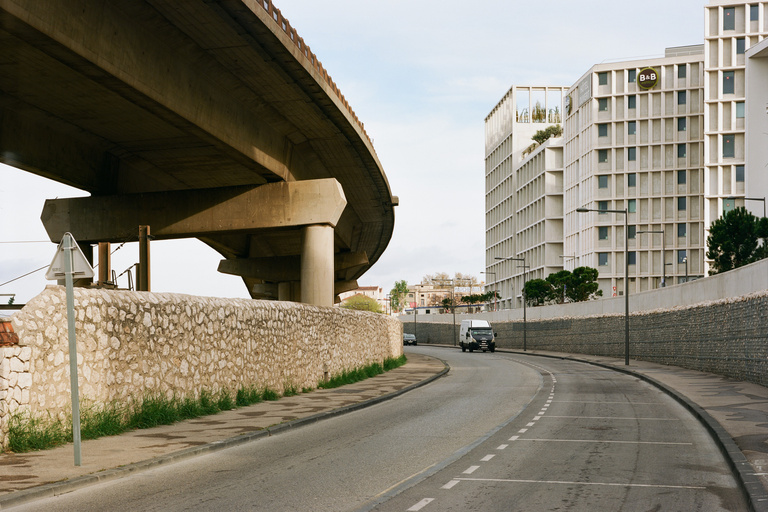
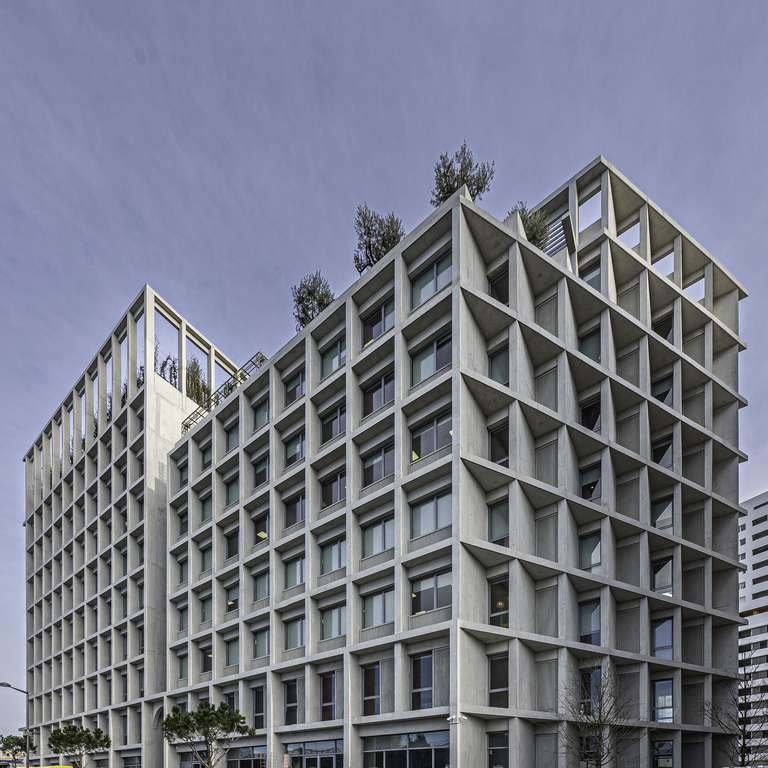
A new element in the city’s profile, Smartsea punctuates the maritime frontage, the great linear sequence stretching from the Old Port to L’Estaque. Oriented towards the wider landscape, the building engages with a magnificent yet constrained territory shaped by the sea, the motorway, and the railway. Built on former industrial brownfield land, it embodies a paradigm shift: the city’s development towards the north.
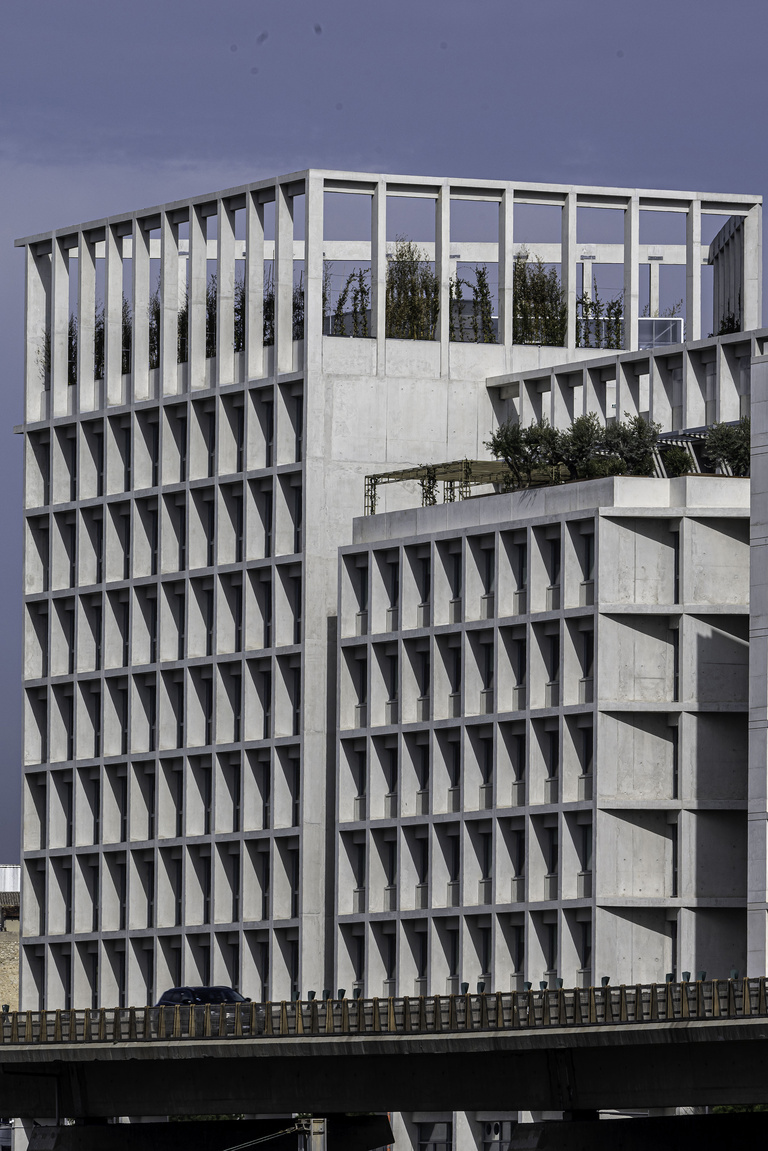
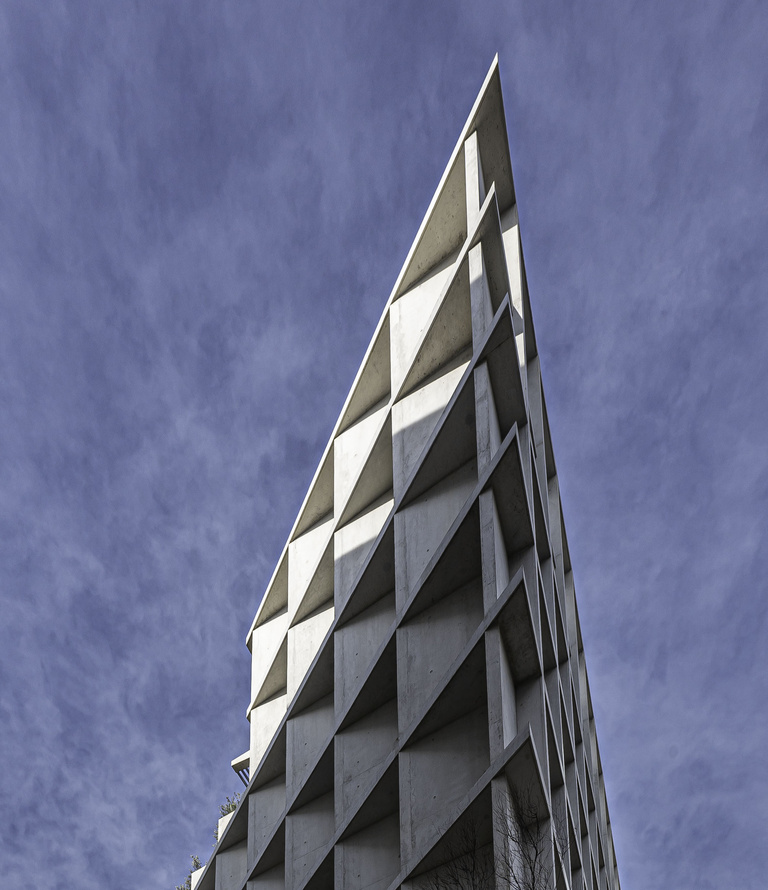
Its architecture reveals an abstract, rational structure that takes on physical substance through its depth, modulated according to orientation. Engaged in dialogue with its surroundings, it echoes the major port infrastructures and industrial facilities that define the territory. The strong presence of the motorway footbridge amplifies this infrastructural character.
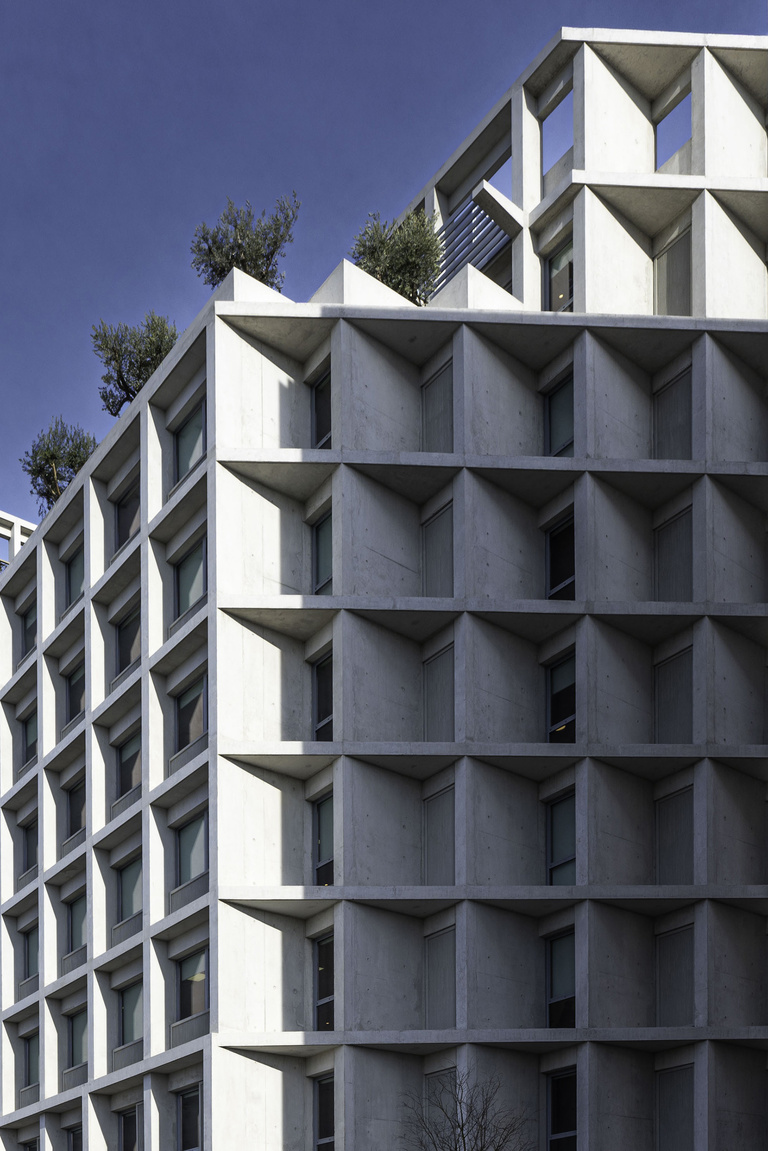
A true landmark for the block, Smartsea is revealed through the interplay of light and shadow on the façades, enhancing its mineral structure and reinforcing its Mediterranean identity.
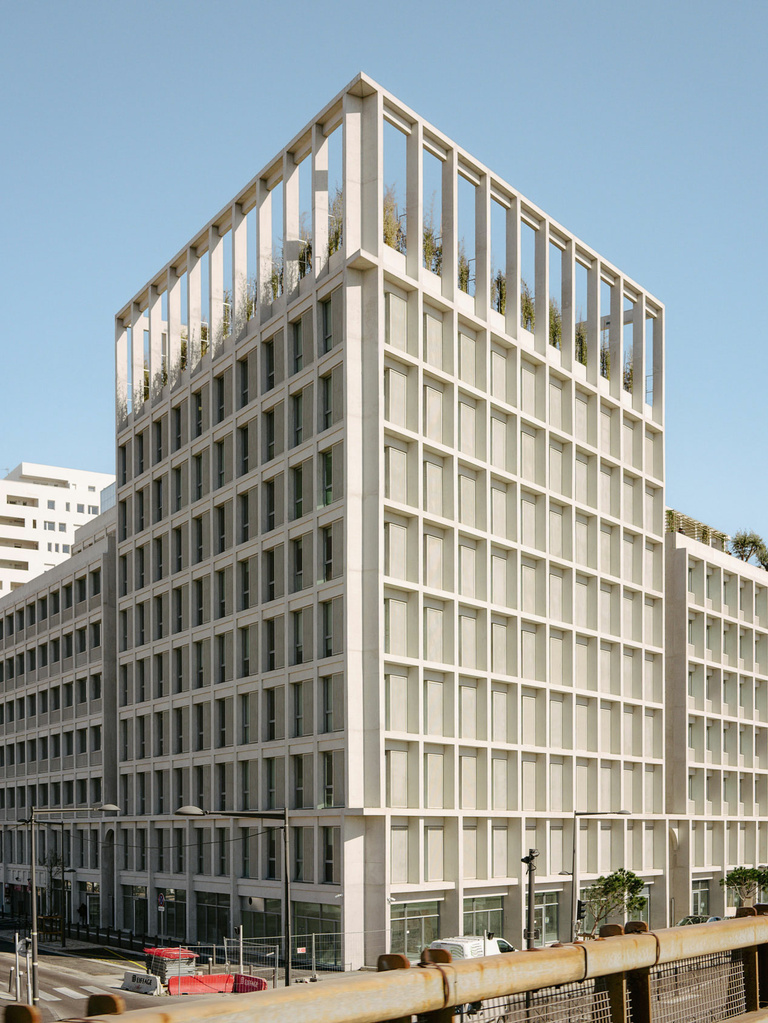
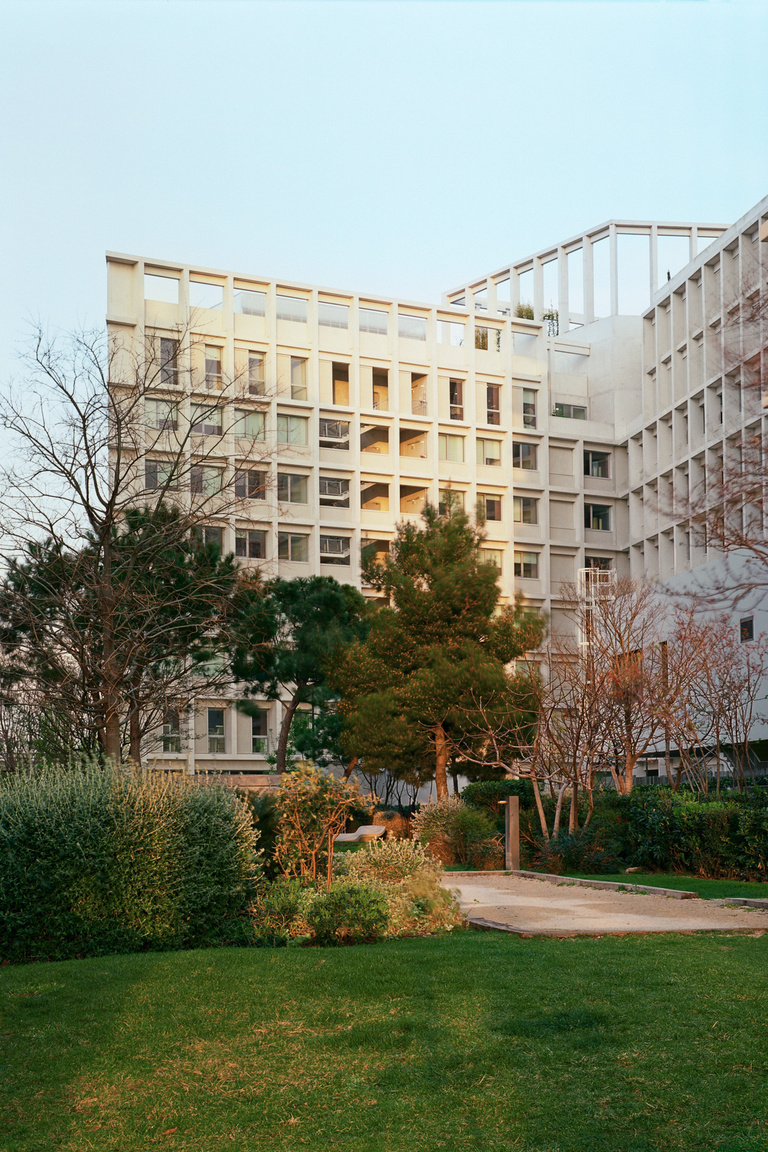
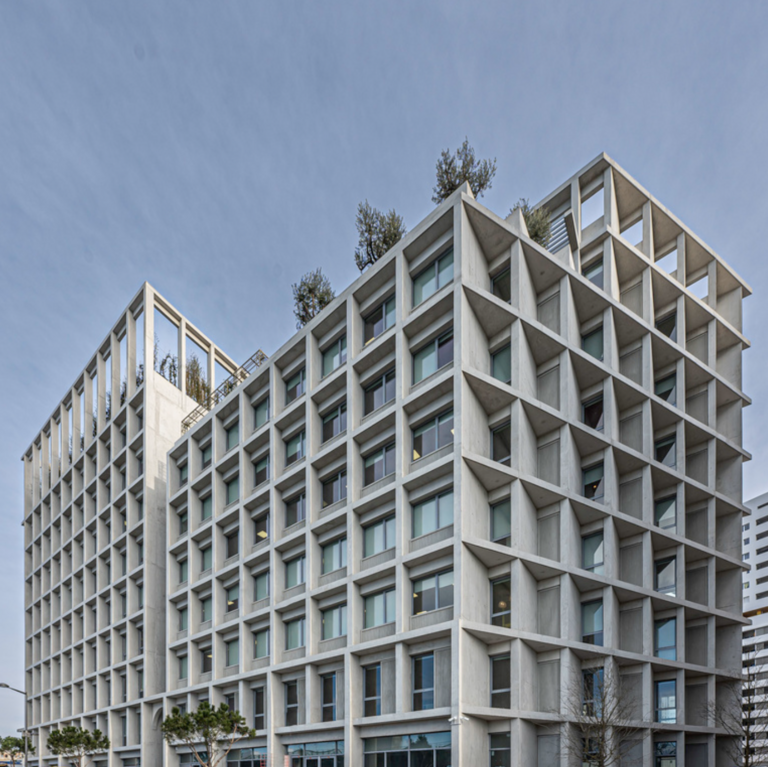
The building is composed of three volumes set on a plinth. The fissures between the volumes allow them to be distinguished and clearly express the building entrances and access to the interior of the block.
The corner volume is defined by its strong verticality, accentuated by the setback of the lateral volumes. The extension of the concrete structural frame at roof level forms a crowning element, a marker for the entire block. This crowning responds to the two-storey plinth that frames the regular body of the building. Seen from the motorway footbridge, it takes on a particular status, framing the hills and directing the gaze towards the territorial scale. It resonates with other landmarks along the maritime frontage, such as the Méditerranée and CMA-CGM towers, as well as with industrial buildings including the Panzani factory, large hangars, and port infrastructures.
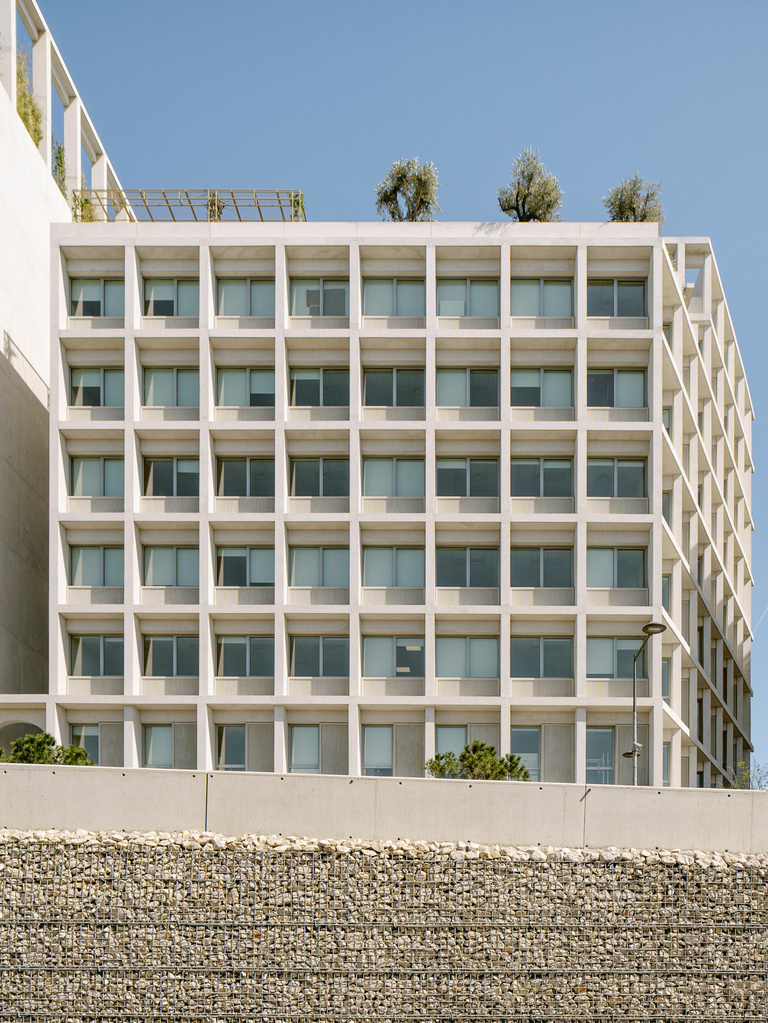
The architectural language asserts the building’s structure. Floor-to-ceiling glazing from column to column highlights the load-bearing concrete frame. Lightweight prefabricated concrete infill elements form the spandrels and mullions. They consist of frames enclosing a finely undulating matrix. The repetition of this structural grid organises the overall composition. It emphasises the singular elements, stretching upwards towards the sky through the crowning structure and giving greater depth to the two-storey plinth.
The building’s strategic position on rue André Allar, at the corner of the district, makes it possible to optimise the interior of the block, providing a landscaped space while shielding it from urban nuisances. The acute angle between rue André Allar and rue Paul Brutus accentuates the building’s perspectives, giving it a dynamic character.